Top Teacher-Recommended Learning Toys for Little Kids

Engaging young children in play that also supports their learning can be a challenge for many parents and caregivers. Teachers, who see firsthand how children develop skills through play, often recommend specific toys that combine fun with educational value. These toys help little kids build essential skills like problem-solving, creativity, fine motor coordination, and early literacy. This post explores some of the best learning toys for little kids, backed by teacher recommendations, to help you choose toys that truly support your child’s growth.
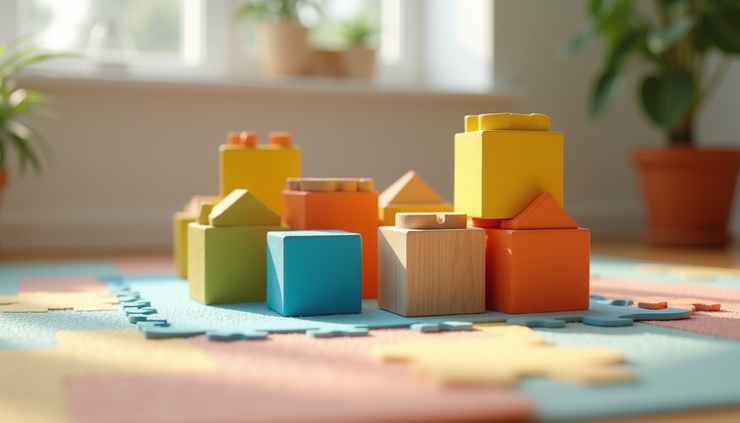
Building Blocks for Creativity and Motor Skills
Building blocks remain a timeless favorite among educators. They encourage children to use their imagination while developing hand-eye coordination and spatial awareness. Wooden blocks, in particular, are durable and safe for little hands. Teachers highlight that blocks help kids understand basic math concepts like shapes, sizes, and balance without formal instruction.
Why teachers recommend building blocks:
Promote creativity through open-ended play
Develop fine motor skills and hand strength
Introduce early math and engineering concepts
Encourage cooperative play when shared with peers
Look for sets that include a variety of shapes and sizes to keep children engaged longer and challenge their problem-solving skills.
Puzzles to Boost Cognitive Development
Puzzles are excellent for developing critical thinking and patience. Teachers often suggest puzzles with large, easy-to-handle pieces for toddlers and more complex ones for preschoolers. Completing puzzles helps children recognize patterns, improve memory, and practice spatial reasoning.
Key benefits of puzzles:
Enhance problem-solving abilities
Improve concentration and focus
Support hand-eye coordination
Build vocabulary when puzzles feature letters, numbers, or animals
Choose puzzles with colorful images and themes that interest your child to keep them motivated.
Interactive Storybooks and Reading Toys
Early literacy is crucial, and many teachers recommend interactive storybooks and reading toys that make learning letters and sounds fun. Toys that read aloud or respond to touch can engage children who are just beginning to explore language.
Features teachers look for:
Clear, simple text paired with engaging illustrations
Audio features that pronounce words and letters
Activities that encourage letter recognition and phonics
Durable design for repeated use
These toys support language development and foster a love of reading from an early age.
Art Supplies to Encourage Expression
Creative expression is a vital part of learning. Teachers often suggest age-appropriate art supplies like washable crayons, finger paints, and large sheets of paper. These tools help children develop fine motor skills and express their emotions and ideas visually.
Benefits of art supplies:
Improve hand dexterity and control
Encourage imagination and storytelling
Provide sensory experiences through different textures and colors
Support emotional development by allowing self-expression
Make sure art materials are non-toxic and safe for young children.
Educational Board Games for Social Skills
Board games designed for young children teach more than just numbers and colors. Teachers recommend games that require turn-taking, following rules, and cooperative play to build social skills. These games also introduce basic math and language concepts in a playful setting.
What to look for in educational board games:
Simple rules that children can understand
Short playtime to match attention spans
Opportunities for counting, matching, or word recognition
Encouragement of teamwork and communication
Playing board games as a family can strengthen bonds while supporting learning.
STEM Toys to Spark Curiosity
Science, technology, engineering, and math (STEM) toys are increasingly popular in classrooms. Teachers recommend toys that let kids explore cause and effect, build simple machines, or experiment with basic coding concepts. These toys nurture curiosity and logical thinking.
Examples of teacher-approved STEM toys:
Building sets with gears and pulleys
Simple robot kits for beginners
Science kits with safe experiments
Coding games that teach sequencing and problem-solving
STEM toys prepare children for future learning by making complex ideas accessible and fun.
Musical Instruments for Brain Development
Music supports many areas of brain development, including memory, language, and coordination. Teachers often suggest small instruments like tambourines, xylophones, or maracas for little kids. Playing music encourages listening skills and creativity.
Advantages of musical toys:
Develop rhythm and timing
Enhance auditory discrimination
Promote fine and gross motor skills
Encourage self-expression and confidence
Choose instruments that are easy to hold and produce pleasant sounds.
Sensory Toys for Exploration
Sensory toys help children explore textures, sounds, and movements, which is essential for brain development. Teachers recommend toys like textured balls, sensory bins, or water play sets to engage multiple senses.
Why sensory toys matter:
Support cognitive and motor development
Help regulate emotions and reduce anxiety
Encourage exploration and discovery
Build focus and attention
Incorporate sensory play regularly to provide a rich learning environment.


Comments